
Across the world, millions of people live with untreated or under-treated mental health conditions—not because solutions do not exist, but because access does not. At Bridge to Wellness, our mission is to help close that gap. We believe thoughtfully designed technologies, including AI, can extend care, insight, and support to people who are too often left beyond the reach of traditional systems.
Mental health care should not be determined by geography, circumstance, or crisis. Yet for many, it still is.
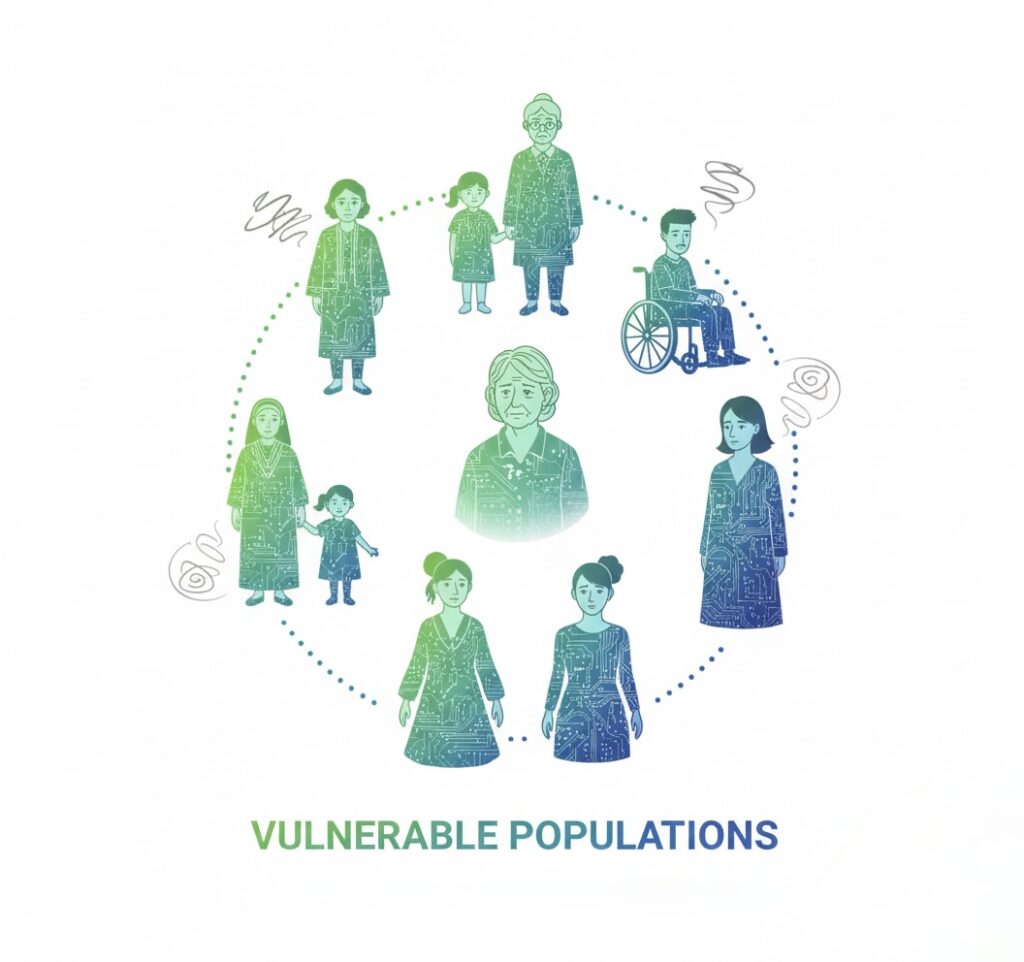
Who Are “Vulnerable” Populations?
Vulnerable populations are individuals and communities at heightened risk for mental health challenges due to social, economic, geographic, or political conditions- and who face significant barriers to receiving consistent, high-quality care. These barriers may include limited healthcare infrastructure, displacement, stigma, poverty, or prolonged exposure to instability and violence.
This includes:
- People affected by war, displacement, and mass trauma, including those in Ukraine, parts
- of the Middle East, and across Africa
- Refugees, internally displaced persons, and asylum seekers
- Children and adolescents growing up amid chronic stress or violence
- Survivors of abuse, natural disasters, and humanitarian crises
- Communities with limited access to clinicians, transportation, or ongoing follow-up care
In trauma-affected regions, the scale of mental health need often exceeds available resources by orders of magnitude.
Why Supporting These Populations Is So Critical
Mental health is foundational to human functioning and long-term recovery. Untreated trauma, depression, anxiety, and PTSD affect not only individuals, but families, communities, and future generations. These conditions influence education, employment, physical health, social cohesion, and economic stability.
In conflict and post-conflict environments, mental health care is frequently:
- Reactive rather than preventative
- Crisis-driven rather than continuous
- Delivered by a small number of professionals serving overwhelming populations
When mental health needs go unmet, suffering often remains invisible until it manifests as crisis-violence, chronic illness, disengagement from society, or lifelong impairment. Early identification and sustained support are among the most effective ways to reduce long-term harm and to foster resilience, recovery, and hope.
Addressing mental health is not an adjunct to humanitarian response; it is a prerequisite for healing and future wellbeing and productivity.
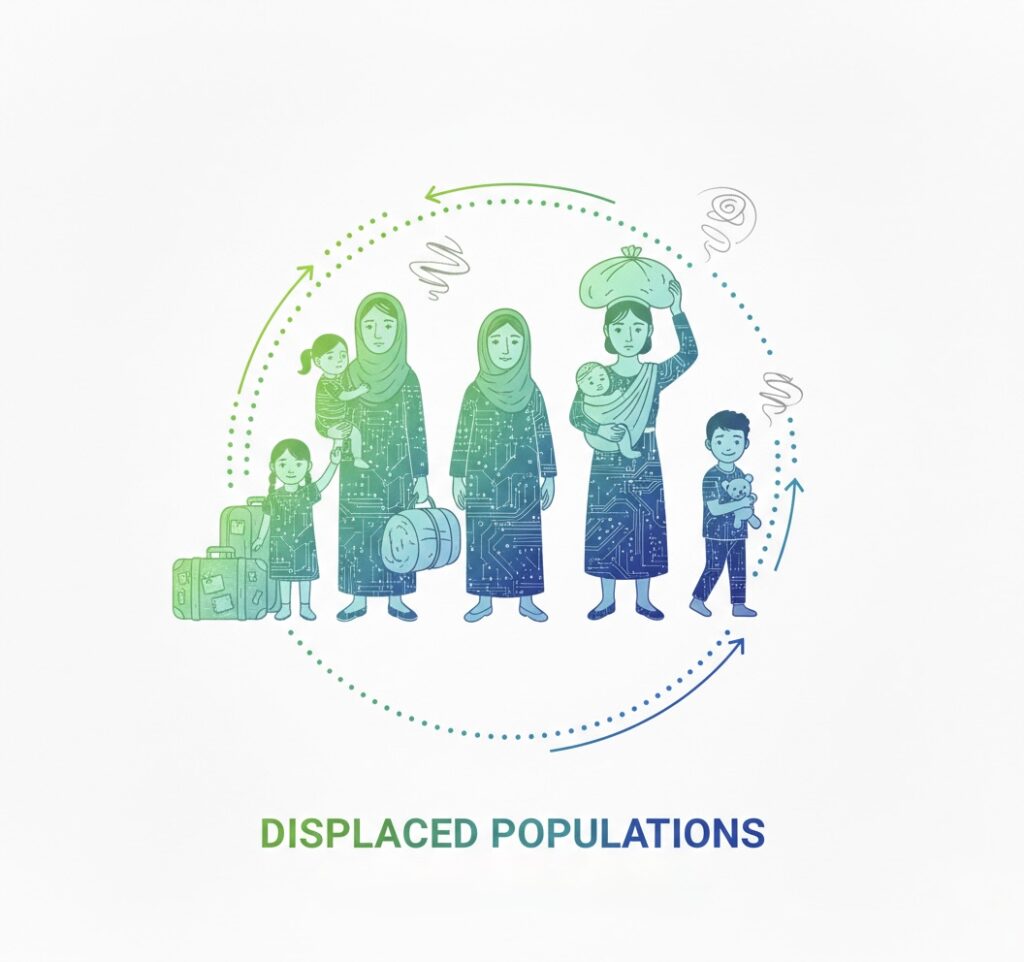
Why Technology Must Be Part of the Solution
Traditional mental health systems alone cannot meet the scale of global demand. Technology allows us to re-imagine how support is delivered—making care more accessible, proactive, and scalable, especially where clinicians and infrastructure are scarce.
At Bridge to Wellness, we focus on technologies that:
- Reach people where they are, including remote and underserved settings
- Support early identification of distress, not only acute crisis
- Enable longitudinal understanding of wellbeing over time
- Strengthen clinicians, caregivers, and systems rather than replace them
When used responsibly and ethically, technologies using AI/ML can help surface patterns, identify risk earlier, and support care teams with better insight—allowing limited human resources to have greater impact.
Looking Forward
We do not view technology as a substitute for human care, but as a bridge—to reach those who might otherwise receive none at all. By working alongside NGOs, health systems, governments and community partners, we aim to extend mental health resources to populations affected by trauma, displacement, and instability.
Our work is guided by humility and urgency. The need is vast. The consequences of inaction are profound. We are committed to being part of a thoughtful, ethical, and scalable response – one that meets vulnerable populations with dignity, compassion, and meaningful support.